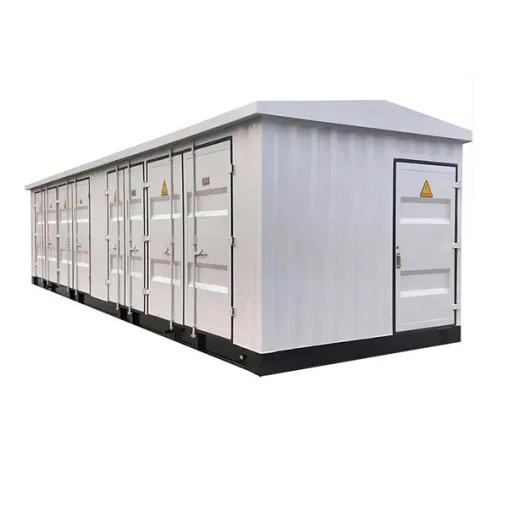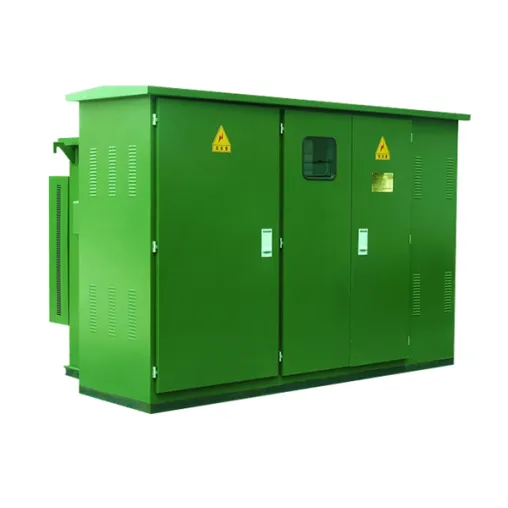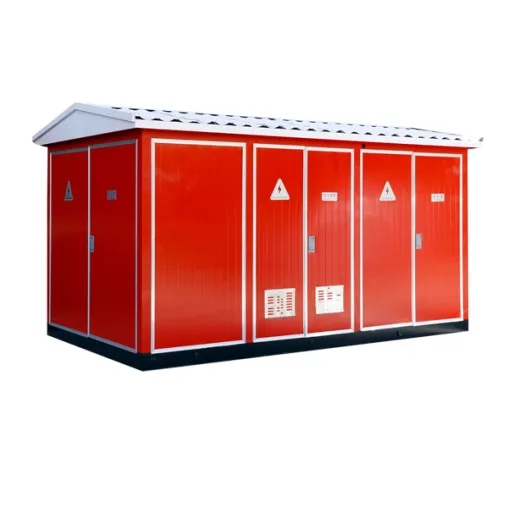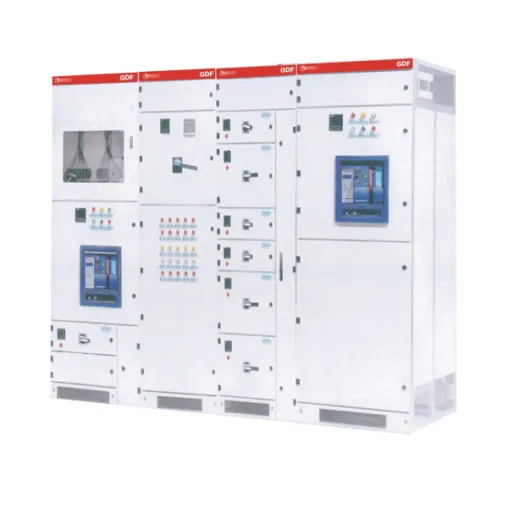
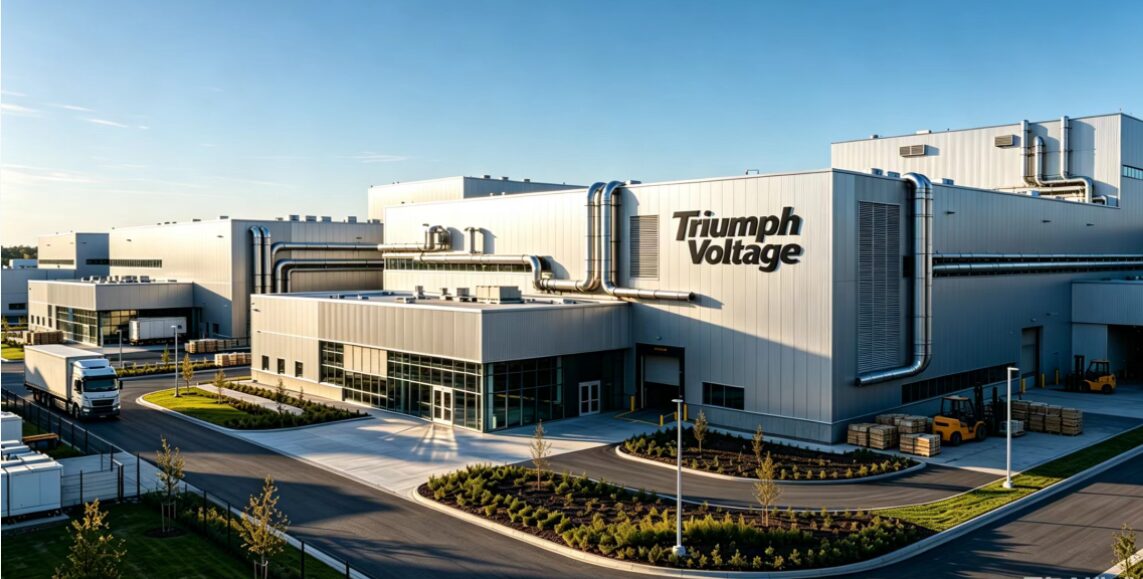
HY-YZC- Prefabricated substation container
Product Introduction:
The prefabricated cabin substation is composed of the precast cabin body and secondary electrical equipment. The production and assembly of a full range of equipment are carried out in complete sets of manufacturers. The prefabricated cabin substation can not only be used for electric energy transmission, but also play a great role in the development of new energy industries such as wind power generation and photovoltaic power generation….
Product performance and qualification requirements:
1. The prefabricated cabin body shall ensure sufficient mechanical strength and stiffness. It will not be deformed or damaged during lifting, transportation and installation, and will not be affected by lifting and transportation on the equipment in the cabin; With good seismic performance and wind resistance.
2. The overall protection level of the prefabricated compartment is not less than IP43, with the effect of dust, moisture and condensation prevention; The interior of the cabin body is strictly divided into compartments by steel plate and flame retardant insulation partition, and the protection level between the compartments is IP40.
3. The prefabricated cabin should have good anti-corrosion performance to ensure that the cabin body does not rust within 20 years, and other cabin body accessories should reach the same service life level.
Technical features:
The prefabricated compartment has created a new construction mode of “standardized design, factory processing and prefabricated construction” for the substation. New construction mode: reduce the footprint, save environmental resources, reduce the cost of infrastructure investment, and effectively shorten the construction and commissioning cycle of smart substation, to achieve rapid station construction; New construction process: modular design, convenient disassembly combination; The equipment can be replaced quickly, the maintenance component warehouse can be easily established, and the standby interval investment can be reduced. Universal process, simplify assembly, energy saving and environmental protection, improve site construction efficiency, and ensure the safety and quality level of project implementation; The new automation technology improves the overall intelligence level of the substation, improves the safety and reliability of the substation, further highlights the positioning of the substation industrial facilities, and lays a solid foundation for the green and healthy development of the smart grid.
Basic definition of modular quadratic combination:
The secondary combination equipment of prefabricated cabin is composed of prefabricated cabin, secondary equipment screen cabinet, secondary equipment, etc. The whole set of secondary equipment is integrated by the prefabricated compartment manufacturer, and related wiring and other work between the screen cabinets are completed in the prefabricated compartment manufacturer, and transported to the engineering site as a whole, and the docking with the primary equipment and civil construction is realized on the site. The modular combination of prefabricated chamber secondary equipment is generally carried out according to the characteristics of the secondary system and the primary object served.
Modular secondary combination advantages:
Modular secondary combination to achieve standardized design, factory processing, assembly construction. The main components of the construction structure are prefabricated in the factory, modular secondary combination equipment is adopted, and universal design and general equipment are applied to realize the plug and play of primary and secondary equipment. Civil construction structures and electrical primary equipment, secondary equipment to fully realize on-site assembly of intelligent substation.
Its advantages are mainly reflected in the following aspects:
(1) Compared with the secondary equipment room, the construction area and floor area are reduced, environmental protection is achieved, many installation links in the construction process are eliminated, and pollution is reduced.
(2) The secondary equipment is integrated in the manufacturer and the wiring is completed, which helps to integrate the functions of the secondary equipment, improve the concentration and integration of the equipment, effectively save equipment and reduce the field workload, and meet the technical requirements of “resource-saving”.
(3) The prefabricated cabin type combined secondary equipment has also changed the joint adjustment mode, using the joint adjustment mode of the prefabricated cabin manufacturer and the workshop + on-site debugging mode. The operation of the design is simulated in the workshop of the prefabrication cabin manufacturer, and the curing work of SCD files of the equipment such as the five-guard logic of the whole station and the naming of signal point table is completed. The transmission verification only needs to be carried out between the equipment and the site.
(4) The secondary design is simplified, and a complete virtual terminal point table can be generated after the completion of the workshop, which can be attached to the design file according to the different requirements of local scheduling.
(5) Save money. The secondary is arranged in the distribution interval, which reduces the length of the secondary optical cable and cable, saves materials and reduces the cost.
(6) Change the construction process, change the current serial construction mode to parallel construction mode, and save more than 60% of the on-site commissioning cycle.